JavaScript Closures Explained
Step through scope chains and see how inner functions capture variables from their parent — visually.
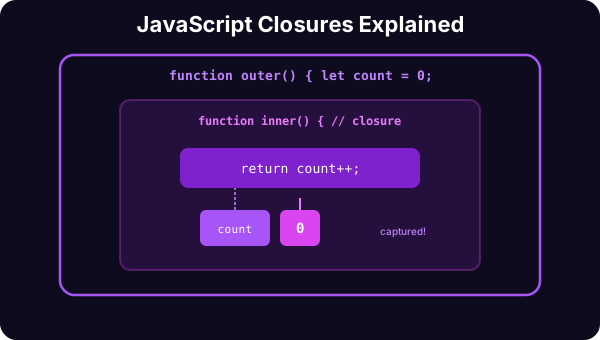
What is a Closure?
A closure is a function that remembersthe variables from its outer scope even after the outer function has returned. It "closes over" those variables, keeping them alive in memory. This is one of JavaScript's most powerful and distinctive features.
Every time a function is created, a closure is formed if that function references variables from an outer scope. The closure maintains a reference to its lexical environment, allowing it to access those variables even when the outer function has completed execution.
Why Closures Matter
Closures are fundamental to JavaScript programming. They enable data privacy without classes, function factories, currying, memoization, and the module pattern. Understanding closures is essential for writing clean, modular, and maintainable code.
Many modern JavaScript patterns and frameworks rely heavily on closures. React hooks, Redux middleware, and lodash utilities all use closures under the hood. Mastering closures will make you a better JavaScript developer and help you understand how libraries work internally.
What You'll Learn
- Closure basics — how closures form and what they capture
- Lexical scope — functions access variables from where they were defined
- Scope chains — nested functions create chains of accessible scopes
- The loop pitfall — why var in loops causes unexpected behavior
- Practical patterns — module pattern, function factories, currying
- Memory management — how closures interact with garbage collection
Closure Basics
Closures are one of JavaScript's most powerful features. They enable data privacy, function factories, and many design patterns. Understanding closures deeply is essential for writing clean, maintainable JavaScript.
A closure is formed when a function is defined inside another function and references variables from the outer function. The inner function "closes over" these variables, keeping them alive even after the outer function has finished executing.
Code Example
function outer() {
  const message = "Hello";

  function inner() {
    console.log(message);
  }

  return inner;
}

const myClosure = outer();
myClosure(); // "Hello"
Scope Visualization
→ Closes over message
When outer() returns, inner() still has access to message
How It Works
A closure is created when an inner function captures variables from its outer function. Even after the outer function returns, the inner function remembers those variables.
Key Takeaways
- • Closures capture variables — inner functions remember outer scope variables
- • Lexical scope — functions access variables from where they were defined, not called
- • Scope chain — nested functions create a chain of accessible scopes
- • Data privacy — closures enable private variables without classes
- • Memory — closures keep variables alive as long as the function exists
Closures are powerful but have a common gotcha — using them in loops with var can cause unexpected behavior because all closures share the same variable reference. Next, explore closures in loops and how to avoid this pitfall.
Next Steps
Now that you understand closures, explore related JavaScript concepts:
- Async/Await — how closures interact with asynchronous code
- The Event Loop — how JavaScript handles asynchronous operations
- DOM Manipulation — closures in event handlers and DOM manipulation
- React Hooks — how React uses closures for state management